
Moisture from breathing and paper
Water enters through the conservator and gaskets; the paper releases more as it warms.
Water attacks both jobs transformer oil does, cooling and insulating. A permanently mounted unit removes it as fast as it enters.
Water enters through the conservator and gaskets; the paper releases more as it warms.
Dielectric strength falls as water and particles rise; the test lab flags it.
Cellulose fibres, oxidation sludge and tap changer metal all circulate.
An outage just to treat the oil is costly and hard to schedule.
A failed transformer is among the most disruptive losses on a network, and replacements take months.
The business caseSizing follows from the rating, oil volume and your last test report.
Permanently mounted, low flow, running with the transformer energised.
Media specified for dielectric service, not standard hydraulic media.
The unit is tracked against your existing oil test reports.
Water content and breakdown voltage worsening every year despite annual mobile treatment. A permanent online unit stopped the rise; the annual outage came off the plan.
A typical project: customer not named, figures indicative. Verified site data available on request.
Case studies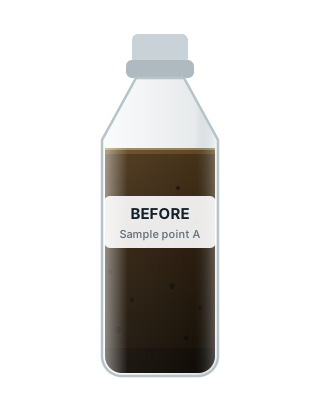
Before

After
Yes, when the equipment is designed for it and installed properly, agreed with your operations team.
Our unit is a Desorber, not a vacuum plant. It warms the oil to 70 degrees C and passes cold dry air against it, which carries the water away, so there is no vacuum and no boiling. A vacuum plant is faster in one campaign; a fitted Desorber holds the number down all year.
No, gas removal is a vacuum process. If DGA results are the concern, that is a different job.
Send water content, breakdown voltage and transformer rating. We will advise whether online treatment will hold the values.