
CJC Depth Filtration

CJC depth filtration technology

Oil passes slowly through roughly 40 mm of wound cellulose media. The full depth of the bed traps particles down to 3 µm absolute, absorbs free and emulsified water, and holds the soft oxidation products that form varnish. The filter itself applies no heat, no vacuum and has no rotating parts. Where more water has to come out, a CJC Desorber does it by desorption into dry air, not by vacuum.

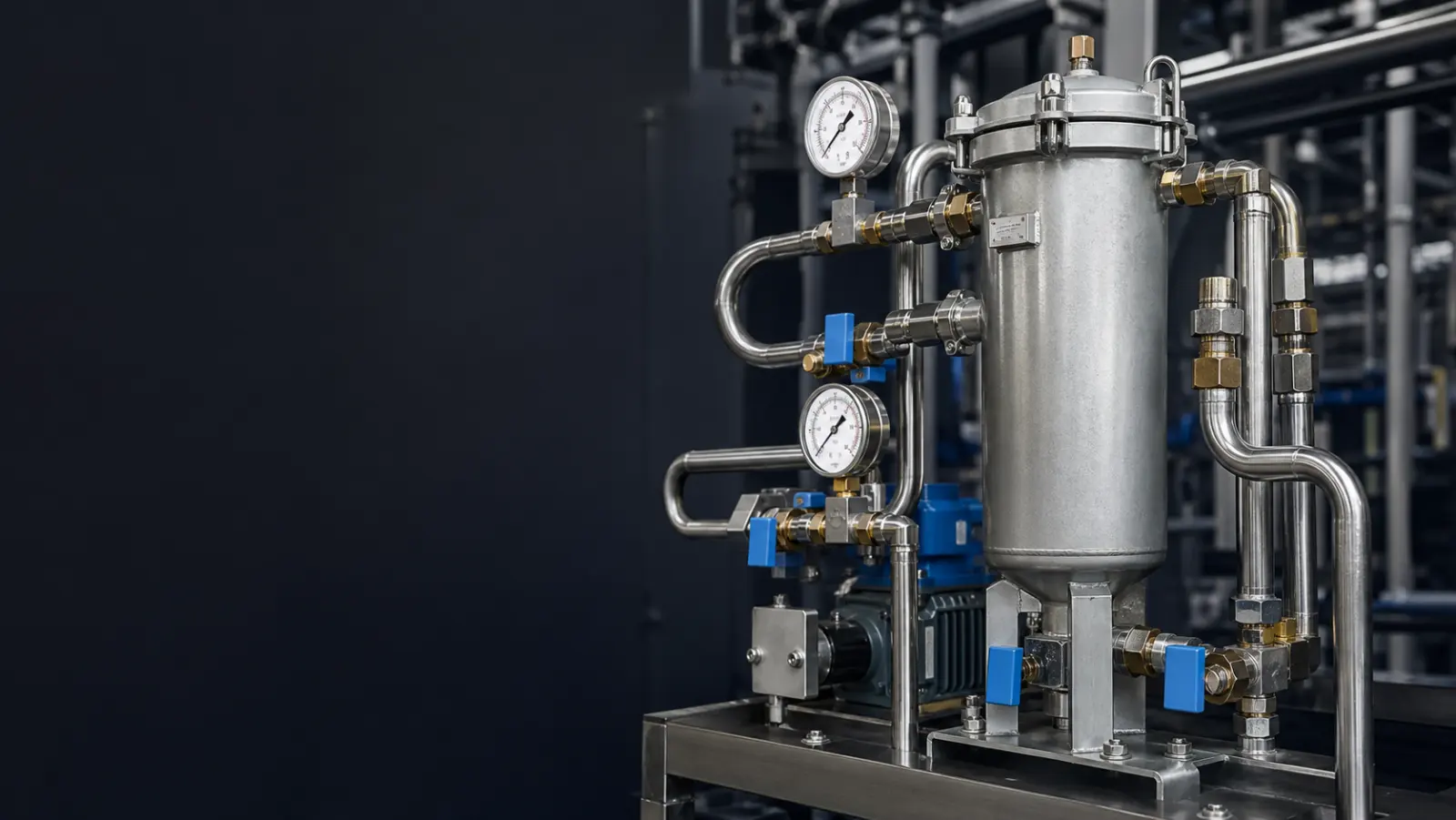
Close view of a CJC offline depth filtration unit and the oil circuit hardware around it

Filtration fineness

3 µm absolute

0.8 µm nominal

Low flow through a deep media bed.

Cleanliness Progression

What the oil does over the first month

A contaminated tank cleans up in stages. The trend also shows whether the dirt ingress has stopped.

Day 0, before the loop is startedISO 22/20/17
Day 3, first pass through the tank completeISO 20/18/15
Week 2, bulk contamination outISO 17/15/12
Week 4 onward, holding steadyISO 15/13/10

Indicative trend for a hydraulic system of a few thousand litres, six tank turnovers a day. Heavier ingress, colder oil or a bigger tank takes longer.

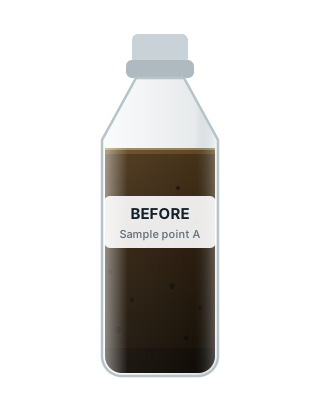
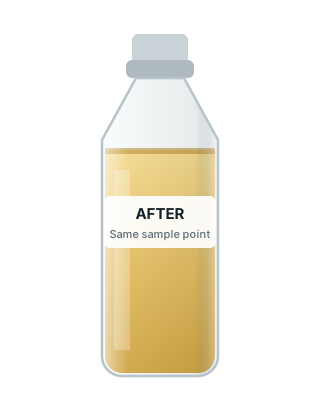
Before and after, same tank

The lab count measures the change. The samples show it.

Oil sample before offline filtration: dark, cloudy and carrying suspended contamination

Before

Dark and hazy. Water above the alarm limit.

Oil sample after offline depth filtration: clear, bright and free of visible haze

After

Same oil and machine, after offline filtration.

Illustration. Site photographs available on request.

Alternatives

Compared with other methods

Vacuum dehydration and centrifuges are the common alternatives. Both work within their duty. Both cost more to run, and neither removes the oxidation products that form varnish.

Why we use a Desorber, not vacuum

  • A vacuum unit runs a heater and a vacuum pump. A filter loop runs a fractional kW motor.
  • Heat plus vacuum dries oil fast, but run too hot or too long it can strip volatile additives.
  • Vacuum dehydration is still the better choice where dissolved water must reach very low ppm quickly.

Compared with centrifuges and coalescers

  • A centrifuge takes free water and heavy solids. Emulsified water and 3 µm silt stay in the oil.
  • Coalescers fail with the surfactant additives in modern oils.
  • On a marine engine with heavy free water, a centrifuge is still the right first stage.

Send us an oil test report

Particle count, water content and acid number show what is damaging the oil. Send a report and we will read it.