
Comparison
Inline vs offline oil filtration
An inline filter protects components from debris the moment it appears. An offline filter lowers the dirt held in the bulk oil. Most plants need both.
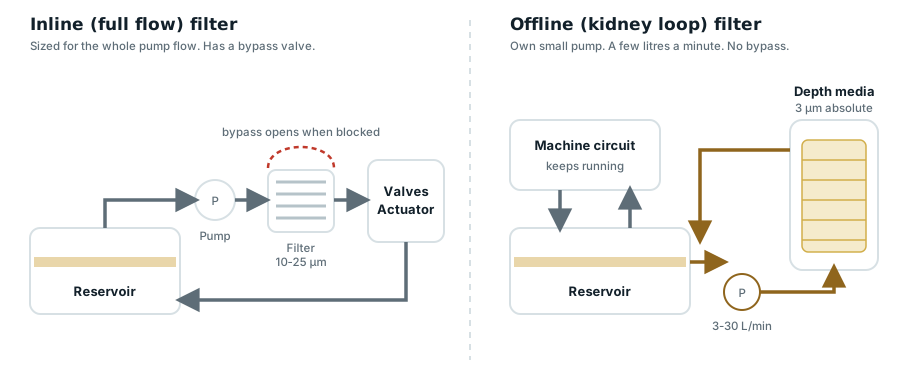
Comparison of the two approaches
| Point of comparison | Inline / full flow filter | Offline / kidney loop filter |
|---|---|---|
| Where it sits | In the pressure or return line, carrying the machine's full flow | Beside the tank on its own pump, plumbed suction and return |
| Flow rate | Whatever the main pump delivers, often 100 to 1,000 L/min | Typically 3 to 30 L/min, sized to turn the tank over several times a day |
| Media rating in practice | 10 to 25 µm. Finer media chokes flow and lifts the bypass | 3 µm absolute, 0.8 µm nominal, because low flow allows a dense bed |
| Bypass valve | Fitted by design. Opens on cold start and when the element loads, sending unfiltered oil downstream | Not required. Oil either goes through the media or the loop stops |
| Dirt holding capacity | Low. Surface media fills quickly and differential pressure rises fast | High. Depth media traps contamination through the whole bed, so it holds far more before change |
| Water removal | None. Mesh and glass fibre pass water straight through | Free and emulsified water absorbed by cellulose media, or removed by a dedicated water remover |
| Oxidation products and varnish | Soft deformable particles squeeze through surface media | Captured in the depth of the bed, which is how varnish comes down in turbine oil |
| Element change | Machine has to stop, and the circuit is opened | Loop is isolated and changed with the machine running |
| Effect of a blocked element | Bypass opens, filtration effectively stops, and nothing on the panel tells the operator | Pressure gauge climbs, insert is changed. Machine protection is unaffected |
| Protects against sudden catastrophic debris | Yes. This is its primary function | No. It cleans the bulk oil, it does not stand between pump and valve |
| Effect on steady state ISO code | Holds a level. Rarely improves it | Pulls the code down and keeps it down |
| Installation | Built into the machine at manufacture | Retrofit. Two connections on the tank, no change to the hydraulic circuit |
| Running cost | Element cost plus the downtime of every change | A fractional kW motor plus insert cost, changed on condition rather than calendar |
Swipe sideways for all columns.
What size unit you need
Tank volume, oil grade and a recent oil test report are enough for us to quote a unit, an insert and a price.